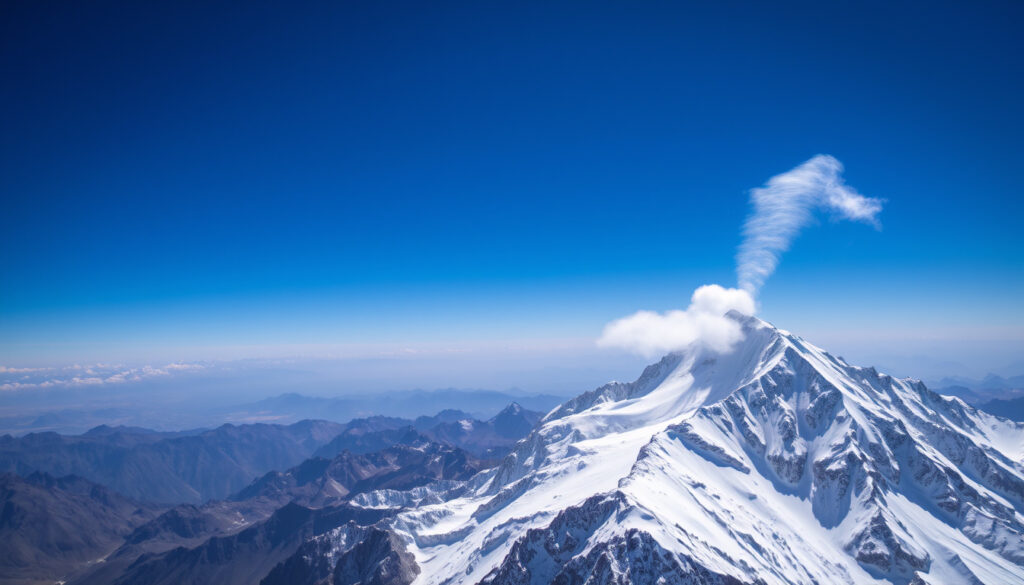
Everest Peak: Height, Name, Dangers & Essential Facts
There’s something about Everest that sticks with you — maybe it’s the sheer scale, or the fact that people keep pushing themselves to stand on top of the world. This guide breaks down the essentials: how high it really is (8,849 meters, as measured in 2020), where it sits on the Nepal-Tibet border, and why a climb can cost more than a house.
Elevation: 8,849 m (29,032 ft) · Location: Nepal–China (Tibet) border · First Summit: May 29, 1953 · Total Deaths (through 2025): over 340 · Typical Cost: around $40,000 – $60,000 · Youngest Summiter: Jordan Romero, age 13 in 2010
Quick snapshot
- Elevation: 8,849 m (29,032 ft) – official joint announcement by Nepal and China (NASA)
- First ascent: 29 May 1953 by Edmund Hillary and Tenzing Norgay (Encyclopaedia Britannica)
- Highest point above mean sea level on Earth (NOAA)
- Exact number of bodies still on the mountain is unknown; estimates range from dozens to over 100
- Full identity of “Green Boots” – widely believed to be Tsewang Paljor (died 1996) – not verified by official records
- 1856 – Peak XV identified as highest by Great Trigonometrical Survey (Britannica)
- 29 May 1953 – First successful summit (Britannica)
- 2010 – Youngest climber (Jordan Romero, age 13) summits (Britannica)
- 2020 – New official height 8,849 m announced (Reuters)
- Permit caps and stricter regulations being discussed by Nepal government after deadly 2023 season
- Climbing costs expected to rise further due to increased insurance and safety requirements
Six key figures capture the essentials about Everest in a single glance.
| Label | Value |
|---|---|
| Elevation (meters) | 8,849 m – official joint measurement by Nepal and China in 2020 (NASA) |
| Elevation (feet) | 29,032 ft – common rounded figure (NOAA) |
| Elevation (km) | 8.85 km |
| First successful climb | 29 May 1953 – Edmund Hillary (New Zealand) and Tenzing Norgay (Nepal) (Encyclopaedia Britannica) |
| Most deaths in single year | 2014 (avalanche) and 2015 (earthquake), each with more than 15 fatalities (National Geographic) |
| Oldest commonly referenced body | “Green Boots” (died 1996) – identity widely attributed to Tsewang Paljor |
What Is the Peak of Everest Called and What Is Its Height?
What is the exact height of Everest in meters and feet?
- The official height of Everest is 8,848.86 meters (29,031.7 feet), jointly announced by Nepal and China in December 2020 (NASA). In general references, it is commonly rounded to 8,849 m or 29,032 ft (NOAA). This measurement resolved a long-running debate between the two countries about whether to use the rock height or the snow height (Reuters).
- Everest remains the highest mountain above mean sea level on Earth (NOAA).
Where is Everest located and which country is it in?
- The mountain sits on the border between Nepal and China’s Tibet Autonomous Region, within the Mahalangur Himal subrange of the Himalayas (Encyclopaedia Britannica).
- The summit area lies exactly on the boundary, and both countries have territorial claims to it (CIA World Factbook).
Bottom line: Everest’s height is now settled at 8,849 meters (29,032 ft). For anyone planning a trip to Nepal or writing a school report, the precise figure from the joint 2020 survey is the authoritative standard.
What Is the Old Name for Everest and Who Was It Named After?
What was Mount Everest originally called in Tibet and Nepal?
- The Tibetan name is Chomolungma (or Qomolangma), meaning “Goddess Mother of the World.” The Nepali name is Sagarmatha, meaning “Forehead of the Sky” (Encyclopaedia Britannica).
- During the Great Trigonometrical Survey in 1856, the peak was recorded as “Peak XV” before it was assigned a European name.
Who was Mount Everest named after?
- The mountain was named after Sir George Everest, the Surveyor General of India from 1830 to 1843. The name was officially adopted by the Royal Geographical Society in 1865 (Encyclopaedia Britannica).
- Sir George Everest himself pronounced his surname as “Eve-rest” (rhyming with “never rest”), not “Ever-est” as commonly said today.
The implication: The mountain carries a colonial-era name that the local communities never used. For Tibetans and Nepalis, the sacred names Chomolungma and Sagarmatha remain the primary labels.
Why Does It Cost $40,000 to Climb Mount Everest and What Are the Dangers?
What does the cost include?
- A typical commercial expedition on the Nepal side costs between $40,000 and $60,000, covering permit fees (around $11,000 per person), guides, high-altitude porters, oxygen tanks, tents, food, and insurance (Encyclopaedia Britannica).
- Permits are issued by the Government of Nepal, and each year hundreds of climbers pay the steep fee for the chance to stand on the roof of the world.
The high cost acts as a natural filter — only climbers who can afford serious preparation and support systems get on the mountain. Yet even with that investment, the danger remains extreme.
How many climbers have died on Everest?
- As of the 2023 season, more than 340 climbers have lost their lives on Everest since the 1920s (National Geographic).
- The deadliest single years were 2014 (avalanche on the Khumbu Icefall, 16 deaths) and 2015 (earthquake-triggered avalanche, 22 deaths). The most common causes of death are falls, altitude sickness, avalanches, and exposure.
“Well, we knocked the bastard off.”
– Edmund Hillary, as quoted by the Royal Geographical Society, on reaching the summit in 1953
The catch: The death toll continues to rise with each season, even as technology and gear improve. The mountain’s “Death Zone” (above 8,000 meters) remains unforgiving.
What Is the 2 PM Rule on Everest and Why Can’t You Climb After That Time?
Why is 2 pm the deadline to summit?
- The 2 pm rule is an operational guideline that says climbers must reach the summit by 2 p.m. or turn around (National Geographic).
- The reason is safety: after 2 p.m., daylight fades, weather rapidly deteriorates, and the risk of being stranded in the dark in the Death Zone becomes extremely high.
What happens if climbers are late?
- Guides and expedition leaders enforce the rule strictly. Late climbers risk running out of bottled oxygen and succumbing to altitude sickness or frostbite.
- Many fatalities over the years have occurred when climbers ignored the turnaround time, including the 1996 disaster immortalized in Jon Krakauer’s Into Thin Air.
The 2 pm rule saves lives, but it also creates pressure. Climbers who have spent $50,000 and weeks of acclimatization are tempted to push on. The rule is only as good as the discipline to follow it.
Why Do Planes Not Fly Over Everest and What Is the Oldest Body Still on the Mountain?
Why do commercial flights avoid flying over Everest?
- Commercial airliners typically avoid the Everest region because of the high altitude (well above 30,000 ft terrain) and the lack of emergency landing options if an engine fails (NOAA).
- The extreme weather and turbulence near the peak add to the risk, so airlines route flights around the Himalayas.
What is the oldest body still on Everest?
- The most famous body is “Green Boots,” believed to be Tsewang Paljor, an Indian climber who died in 1996. The body lies near the northeast ridge route and has served as a grim landmark for decades.
- Cold temperatures and dry air slow decomposition, so many bodies remain visible — a stark reminder of the mountain’s danger.
Who Climbed Mount Everest First and Who Is the Youngest Person to Summit?
Who were the first climbers to summit Everest?
- The first verified ascent was on 29 May 1953 by Edmund Hillary (New Zealand) and Tenzing Norgay (Nepal), as part of a British expedition (Encyclopaedia Britannica).
- Junko Tabei of Japan became the first woman to summit in 1975 (Encyclopaedia Britannica).
Who is the youngest person to summit Everest?
- Jordan Romero of the United States summited on 22 May 2010 at age 13 years, 10 months (National Geographic).
- The record has since been debated and some countries have considered age restrictions, but Romero remains the youngest ever.
“We did it. We stood on the roof of the world.”
– Tenzing Norgay, recalling the summit moment, from his autobiography
The pattern: As the sport grows, records get broken. But each new achievement also raises questions about safety and regulation for climbers – especially the very young.
Timeline of Everest’s Notable Events
- – Great Trigonometrical Survey identifies Peak XV as the world’s highest
- – Named Mount Everest after Sir George Everest
- – British reconnaissance and multiple failed attempts
- – First successful summit by Hillary and Norgay (Encyclopaedia Britannica)
- – Jordan Romero becomes youngest summit at age 13
- – Deadly avalanche and earthquake kill many climbers (National Geographic)
Clarity: What We Know and What Remains Unclear
Confirmed Facts
- Everest is the highest peak above sea level (NOAA)
- First ascent in 1953 by Hillary and Norgay (Britannica)
- Climbing costs typically range from $40,000 to $60,000
- Over 340 deaths recorded through the 2020s (National Geographic)
- Named after Sir George Everest (Britannica)
What’s Unclear
- Exact number of bodies still on the mountain is not officially tallied
- Identity of “Green Boots” not 100% confirmed by official documentation
“The cost of climbing Everest is not just money – it’s preparation, time, and the willingness to accept the risks. Many people don’t realize that the permit alone is half the battle.”
– Alan Arnette, mountaineer and Everest analyst, in an interview with Adventure Journal
For anyone dreaming of the summit, the decision is a stark one: invest the time, money, and training, or stay grounded. For the thousands who attempt it each year, the mountain demands respect — and a clear head when the 2 p.m. deadline looms. For Nepal’s tourism economy, the trade is equally sharp: more climbers bring revenue, but also more search-and-rescue costs and an environmental toll. The choice is clear: regulate wisely, or face the consequences of an uncontrolled climb.
nepalhikingteam.com, usatoday.com, ecoholidaysnepal.com, en.wikipedia.org, instagram.com, facebook.com
For a comprehensive overview of the mountain’s statistics and risks, see Mount Everest peak facts.
Frequently asked questions
What is the exact height of Everest in meters?
The official height is 8,848.86 meters (29,031.7 feet), jointly announced by Nepal and China in 2020 (NASA).
How long does it take to climb Everest?
A typical expedition takes about two months, including trekking to base camp, acclimatization rotations, and the final summit push.
Do you need oxygen to climb Everest?
Most climbers use supplemental bottled oxygen above 8,000 meters, but a few elite mountaineers have summited without it.
What is the best season to climb Everest?
The spring season (April–May) offers the most stable weather. Autumn (September–October) is also possible but less popular.
Can you climb Everest without a guide?
Technically yes, but Nepal requires all foreign climbers to use a licensed guide or expedition operator. It is extremely dangerous to go solo.
How many people summit Everest every year?
In recent years, around 800 to 1,000 people summit per season, with some records exceeding 1,200 in a single year.
What permits are needed for Everest?
Climbers need a Mount Everest climbing permit issued by the Government of Nepal (approximately $11,000) and a visa to enter Nepal.
More related posts
 Gabrielle Union: Health, Net Worth, Age and More
 Iberostar Bella Vista Varadero: 5-Star Resort Guide
 Toronto Blue Jays Results 2024: Scores, Odds & FAQ
 Joseph Gordon-Levitt: Movies, Age, Wife, Height, Net Worth
 Andrew Cuomo: Resignation, Net Worth & 2025 Mayoral Run
 Free AI Video Generators: 2025 Comparison Guide
 Jillian Michaels: Bio, Controversies, Family & Net Worth
 Nombre de Jours Entre Deux Dates – Excel Formulas and Online Tools