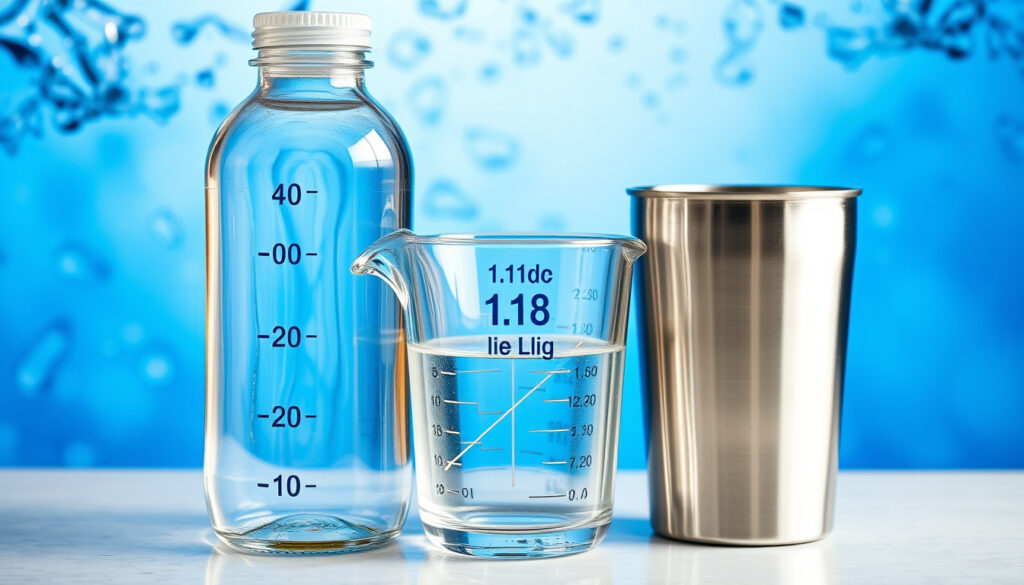
40 oz to Liters: Exact Conversion and Hydration Guide
Anyone who’s looked at a 40 oz water bottle and wondered how that fits into their daily hydration goals isn’t alone. The number 40 pops up everywhere—from Stanley cups to Nalgene bottles—but converting it to liters can feel like a math pop quiz. Here’s the short version: 40 fluid ounces equals 1.18 liters, and that number turns out to be both a handy reference and a potential pitfall when you’re tracking your water intake.
40 fluid ounces to liters: 1.18294 L ·
40 oz in milliliters: 1,183 mL ·
40 oz in cups: 5 cups ·
Recommended daily water intake for men: 3.7 L (125 oz) ·
Recommended daily water intake for women: 2.7 L (91 oz)
Quick snapshot
- 40 fl oz = 1.18294 L (UnitConverters.net’s volume conversion tool)
- 1 L = 33.814 fl oz (UnitConverters.net)
- Men: 3.7 L, Women: 2.7 L daily (U.S. National Academies of Sciences, Engineering, and Medicine (authoritative health guidelines))
- Whether 32 oz bottles are labeled as 1 L in some countries
- Exact individual hydration needs – varies widely by activity, climate, and health
- US fluid ounce defined after 1959 international inch agreement (UnitConverters.net’s definition reference)
- Check your bottle size against daily goals – 40 oz covers only ~30–44% of needs
- Drink 2–3 full 40 oz bottles to meet National Academies recommendations
Five key facts, one takeaway: 40 oz is 1.18 liters, but that’s only a fraction of what most adults need daily.
The conversion table below lays out the exact numbers at a glance.
| Label | Value |
|---|---|
| Exact conversion | 40 US fluid ounces = 1.18294 liters |
| Rounded value | 1.18 L |
| Milliliters equivalent | 1,183 mL |
| Cups equivalent | 5 cups (8 fl oz each) |
| Comparison to 1 L | 40 oz is 0.18 L more than 1 L |
| 1 liter to ounces | 33.814 fl oz |
The implication: 40 oz is not a round liter — it’s a significant 18% over, which can throw off metric-based tracking if you assume they match.
How many liters are in 40 fluid ounces?
The exact conversion factor
- 1 US fluid ounce equals exactly 0.0295735 liters (UnitConverters.net’s official conversion factor).
- 40 fl oz × 0.0295735 = 1.18294 liters (DollarTimes conversion calculator).
- A quick mental shortcut: multiply by 0.03 to get about 1.2 L (Kisskind hydration guide).
That last trick works because 0.0295735 rounded to 0.03 still gives a close estimate—1.2 liters—which is fine for everyday hydration checking. For cooking or precise mixing, stick with the full factor.
That mental shortcut also masks the fact that 40 oz is not a full liter and a half. If you’re aiming for 2 liters a day, you need almost two 40 oz bottles—not one.
The pattern: rounding helps speed, but it can mislead when you scale up to daily targets.
Using a simple formula
- Formula: Liters = Ounces × 0.0295735
- Example: 40 × 0.0295735 = 1.18294 L (UnitConverters.net’s conversion tool).
- Reverse: Ounces = Liters × 33.814
If you have a bottle marked in ounces and need liters, just plug the number in. It takes five seconds. The implication: for 0.5 L bottles (common in Europe), you’re carrying about 16.9 oz.
Is 32 oz a 1 liter?
How many liters is 32 ounces?
- 32 fl oz = 0.946 L (UnitConverters.net).
- 1 liter = 33.814 fl oz (DollarTimes).
So 32 oz is about 5.4% short of a liter. That may not sound like much, but over a day it adds up—drinking three 32 oz bottles gives you only 2.84 L, not 3 L.
Why 32 oz is not a liter
- Some 32 oz bottles are labeled as 1 L in certain markets, but that’s a convenience label, not exact (Desert Island Dishes (cooking and measurement reference)).
- The difference: 32 oz = 0.946 L vs. 1 L = 33.814 oz. The gap is 1.814 oz—about a large sip.
The pattern: metric labeling on imperial bottles creates confusion. Always check the actual liter number on the label.
How much is 1 liter in ounces?
Reverse conversion from liters to ounces
- 1 L = 33.814 US fluid ounces (UnitConverters.net’s reverse conversion).
- Approximate: 1 L ≈ 34 oz
That means a standard 1 L reusable bottle holds roughly the same as a 34 oz vessel—closer to 32 oz than 40 oz.
Practical examples
- A 40 oz Stanley cup holds 1.18 L, or 18% more than a 1 L bottle.
- A 64 oz growler holds 1.893 L, nearly 2 L (Kisskind bottle size comparison).
- A standard disposable water bottle (16.9 oz) holds 0.5 L exactly.
Why this matters: if you’re trying to hit 2 L a day, you can either drink four 16.9 oz bottles, or one 40 oz plus some, but mixing metrics can trip you up.
The catch: knowing each bottle’s liter equivalent keeps your tracking accurate.
How much water should I drink a day?
Is 40 oz of water per day enough?
- Men: 3.7 L (125 oz) total water per day (U.S. National Academies of Sciences, Engineering, and Medicine (authoritative health guidelines)).
- Women: 2.7 L (91 oz) total water per day (National Academies).
- 40 oz = 1.18 L, which is below the recommended 2.7–3.7 L for most adults.
Drinking 40 oz covers roughly 32% of men’s needs and 44% of women’s. It’s a good start, but not enough on its own.
The pattern: a single 40 oz bottle is a useful milestone, but it’s only a fraction of total daily needs.
General hydration guidelines from health authorities
- The National Academies’ Adequate Intake (AI) includes water from all sources—beverages and food.
- Active people, hot climates, and illness increase needs (National Academies’ hydration report).
- A simple rule: drink enough so your urine is pale yellow.
A single 40 oz bottle is a useful milestone, but most adults need 2–3 full 40 oz bottles a day to meet official recommendations. Relying on one bottle alone likely leaves you dehydrated.
How many 40 oz are in 2 liters?
Calculating the number of 40 oz servings in 2 L
- 2 L = 67.628 fl oz (UnitConverters.net conversion).
- 67.628 ÷ 40 = 1.69 bottles (a bit more than 1.5).
So two liters is roughly 1.7 times a 40 oz bottle. If you’re tracking by bottles, drink one full 40 oz plus about 27 oz more to hit 2 L.
Practical meaning for water bottles
- Stanley 40 oz cup: 1.18 L – you need 1.7 fills to reach 2 L.
- Nalgene 32 oz: 0.946 L – you need about 2.1 fills.
- Standard 16.9 oz disposable: 0.5 L – you need exactly 4 bottles.
The takeaway: 2 L is a common daily target. Knowing your bottle’s capacity in liters helps you track without guesswork.
What this means: using 40 oz as a baseline requires 1.7 bottles to reach 2 L — a fraction that’s easy to miscalculate if you forget the conversion.
Pros and cons of using 40 oz as a hydration baseline
Upsides
- 40 oz is a common water bottle size, easy to find and refill.
- Conversion is simple: 1.18 L fits neatly into daily tracking if you drink 2–3 bottles.
- 5 cups (8 oz each) – easy mental math for cup-based trackers.
Downsides
- 40 oz alone is less than half the recommended intake for most adults.
- Confusing with imperial vs. US fluid ounces – some bottles use imperial (28.4 mL/oz).
- Not a round metric number – 1.18 L is not a simple fraction of 2 L.
The pattern: 40 oz works as a stepping stone, but it’s not a full solution for daily hydration tracking.
How to convert 40 ounces to liters: step by step
- Identify the type of fluid ounce. US fluid ounces (29.57 mL) differ from imperial (28.41 mL). Most US bottles use US fl oz.
- Use the conversion factor: 1 US fl oz = 0.0295735 L.
- Multiply: 40 × 0.0295735 = 1.18294 L.
- Round if needed: 1.18 L for everyday use, or 1.2 L for quick estimates.
- Cross-check with reverse: 1.18294 L × 33.814 = ~40 oz (UnitConverters.net verification tool).
That’s all there is to it. Once you’ve done it a few times, you’ll know that 40 oz is about 1.2 L.
The implication: you can do the math in seconds, and the habit keeps your hydration tracking honest.
What’s clear and what’s not about 40 oz to liters
Confirmed facts
- 40 US fl oz = 1.18294 L (US customary system) (UnitConverters.net).
- 1 L = 33.814 fl oz (DollarTimes).
- Daily water intake recommendations from National Academies: men 3.7 L, women 2.7 L.
- 40 oz = about 5 eight-ounce cups (Answers.com (math and science reference)).
What’s unclear
- Whether 32 oz bottles are labeled as 1 L in some markets – convenience labeling varies.
- Exact hydration needs for individuals – depends on activity, climate, and health.
- Whether imperial fluid ounces are used in some product labeling – caution needed.
Expert perspectives
“There are 1.183 liters in 40 fluid ounces.”
“Adequate intake for men is about 3.7 L, for women 2.7 L of total water per day.”
— U.S. National Academies of Sciences, Engineering, and Medicine (health and nutrition authority)
“A 40-ounce bottle of water contains about 1.1829 liters, which is roughly 5 cups of water.”
“One liter is approximately 33.814 US fluid ounces, so 40 ounces is about 18% more than a liter.”
— UnitConverters.net (volume conversion tool)
For anyone tracking water intake in liters, the bottom line is simple: a 40 oz bottle is a convenient starting point, but you need 2–3 of them daily to meet official guidelines. Relying on one alone could leave you short by more than half.
If you’re wondering how that 40 oz water bottle compares to metric measurements, our 40 oz to liters conversion guide breaks down the exact volume and daily hydration implications.
Frequently asked questions
How many liters is 40 oz of water?
40 US fluid ounces equals 1.18294 liters, commonly rounded to 1.18 L.
Is 40 oz more than 1 liter?
Yes. 40 oz = 1.18 L, which is about 18% more than 1 liter.
How many 40 oz bottles make a gallon?
A US gallon is 128 fl oz, so 128 ÷ 40 = 3.2 bottles.
Is 32 oz the same as 1 liter?
No. 32 oz = 0.946 L. One liter is 33.814 oz. They are not the same.
How many milliliters are in 40 oz?
40 US fl oz = 1,183 mL.
How many cups is 40 oz of water?
40 oz = 5 cups (8 fl oz per cup).
What is 40 oz in liters for Stanley cups?
Stanley’s classic 40 oz cup holds 1.18 liters.
Is drinking 40 oz of water per day enough to stay hydrated?
For most adults, 40 oz (1.18 L) is too low. The National Academies recommend 2.7 L for women and 3.7 L for men.
5.2 Feet in CM: Convert 5.2 ft to Centimeters Exactly
110 cm in Inches: Exact Conversion, Sizing & Health Guide
More related posts
 Signs of Low Iron – Symptoms, Causes and When to See a Doctor
 Does Canada Post Deliver on Weekends? Saturday & Sunday Policy
 Pierre Poilievre: biography, beliefs, family, net worth
 Quinn Hughes Trade Rumors – Traded to Minnesota Wild
 Estée Lauder: Boycott, Brands, and Best Products
 Why Did Daft Punk Break Up? Retirement & Last Song Explained
 Lac du Bonnet Fire: 28 Homes Lost, 2 Dead in Manitoba Wildfire
 What Area Code is 437? Toronto Location, Time & Scam Risks